Real Deployments, Real Metrics

AI Agents We've Shipped for Malaysian Enterprises

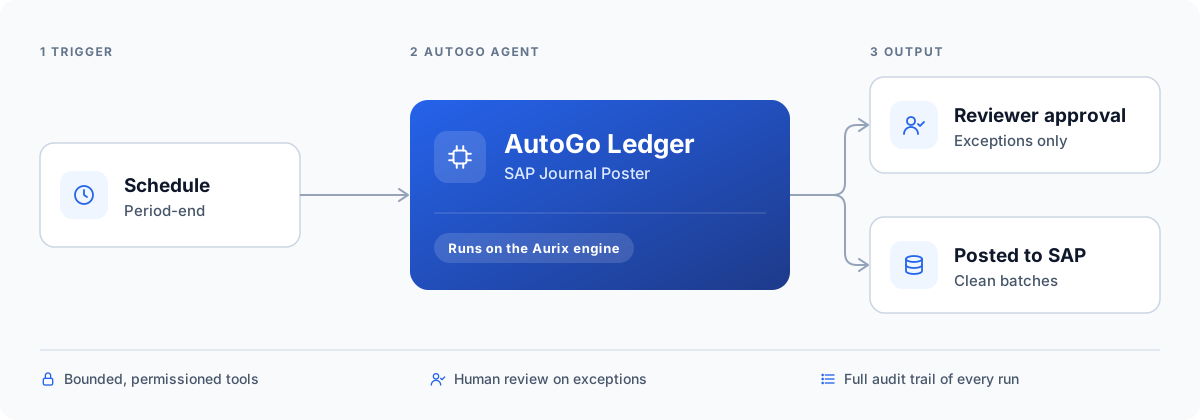
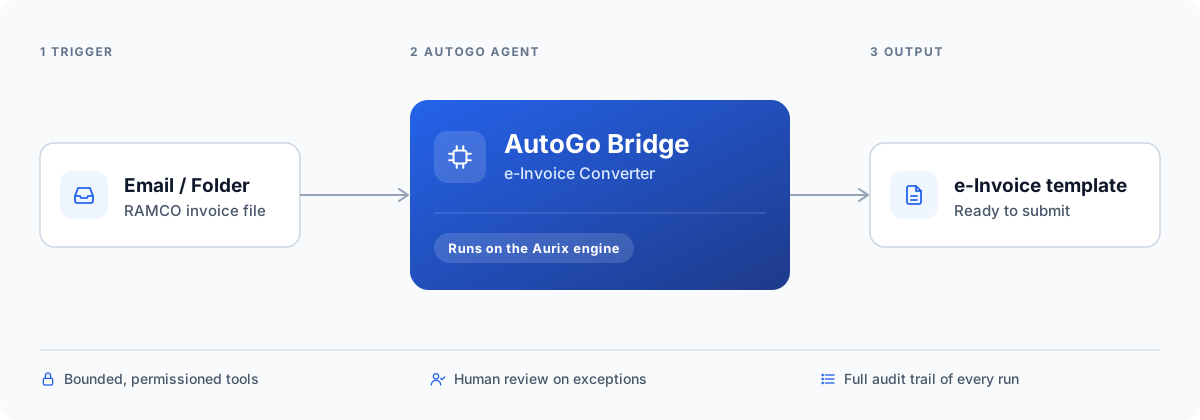
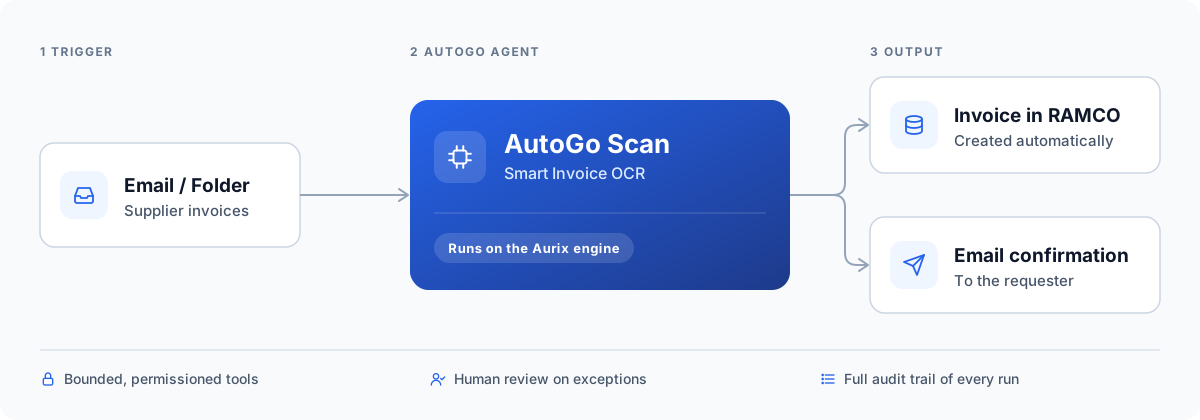
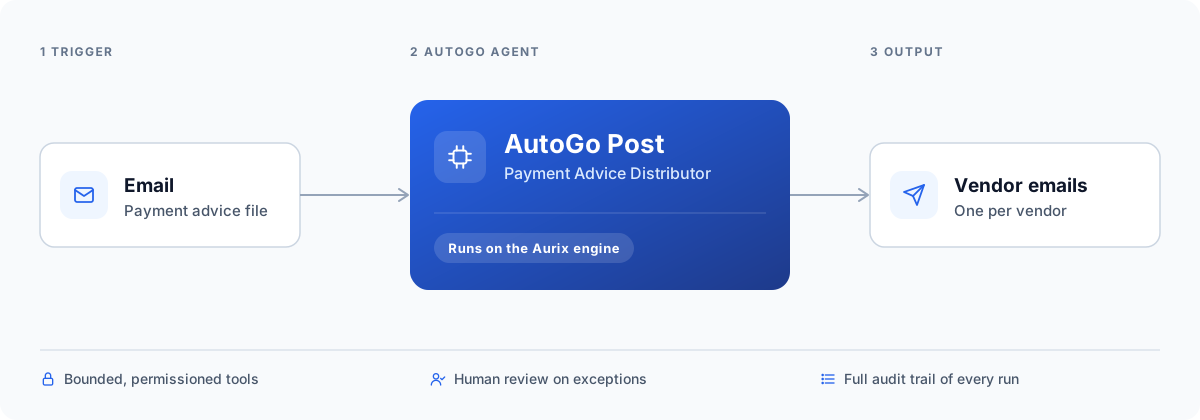
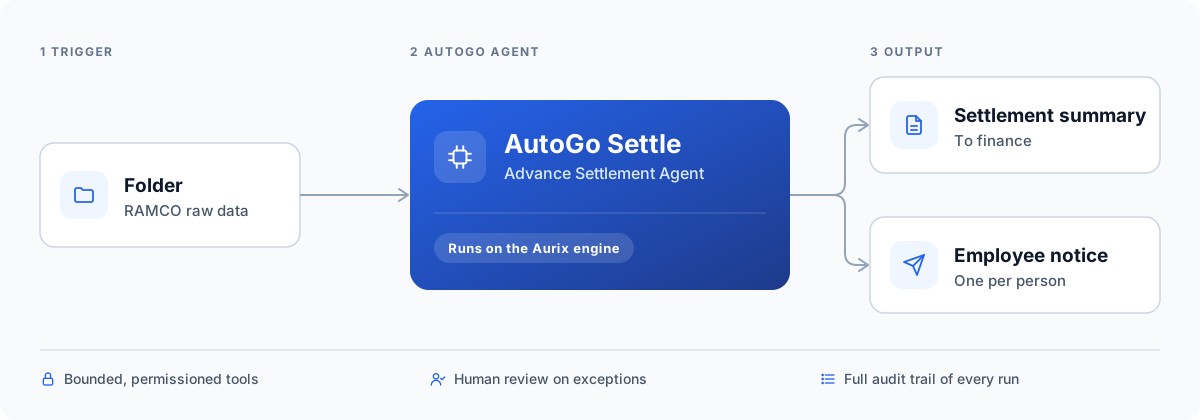
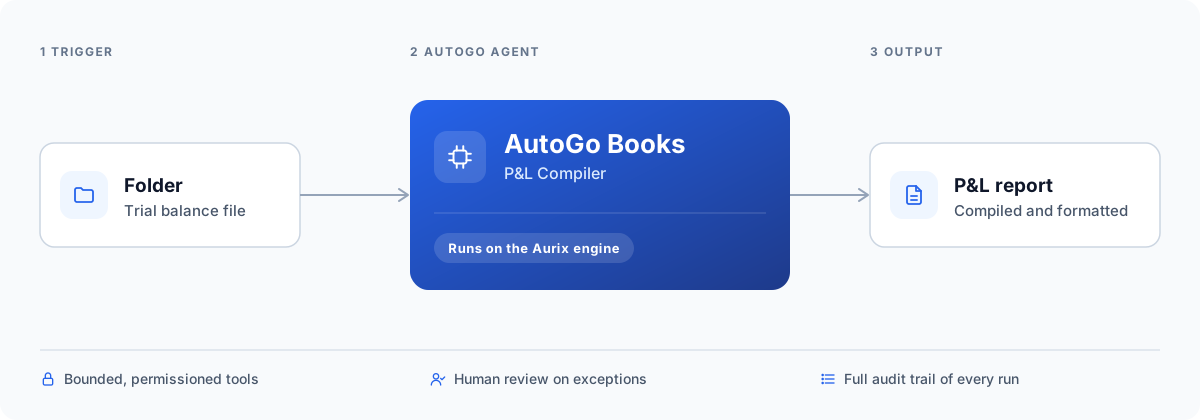
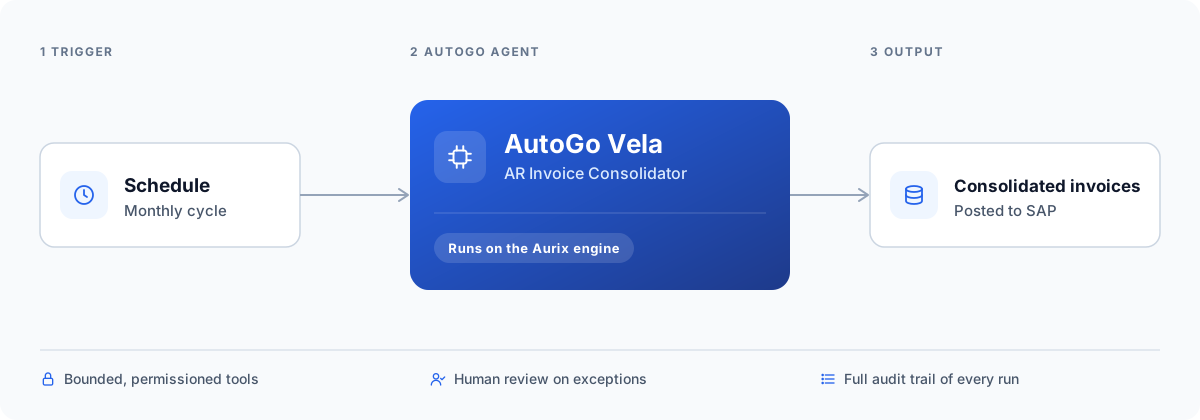
Every agent listed here is real, delivered at a Malaysian F&B manufacturer and a large Malaysian enterprise across finance, e-Invoice, and reporting workflows. All of them run on AutoGo, powered by our Aurix multi-agent engine, on Microsoft Azure.

17 agents delivered
SAP and RAMCO covered
Six to eight week first deployment

We do not sell an "AI agent platform" and hope. We build specific agents, scoped to specific workflows, running on our own Aurix engine. Each one below has a name, a job, an ERP, and a real client engagement behind it. Some are running in production. Others were validated in a POC. We label each one honestly. If your finance function has any of these workflows, we can walk you through what it took to make it work.

See how agents meet enterprise security, compliance and SLA needs

Healthcare Agents We Can Build For You

Four healthcare AI agent patterns we deliver in six to eight weeks for Malaysian private hospital groups, TPAs, and healthcare providers. Same Aurix engine as our live agents, adapted for revenue cycle and administrative workflows. Reviewer-in-the-loop from day one, full audit trail, ready for PDPA and MOH scrutiny. If your team has the workflow, we can build the agent.

Oil & Gas Asset Integrity Agents We Can Build For You

Five asset integrity AI agent patterns we deliver in six to eight weeks for oil and gas operators, refineries, gas processing plants, and heavy industry in Malaysia and ASEAN. Same Aurix engine as our live agents, aligned to the frameworks integrity engineers already trust: API 580 / 581 and 579, DNV, ASME, and PETRONAS Technical Standards. Delivered jointly with Optitech, our engineering partner with live integrity project experience in Malaysia and Vietnam. Reviewer-in-the-loop on every AI decision, full audit trail, ready for PTS and DOSH-JKKP evidence requirements.

Every agent runs on

The Aurix Multi-Agent Engine

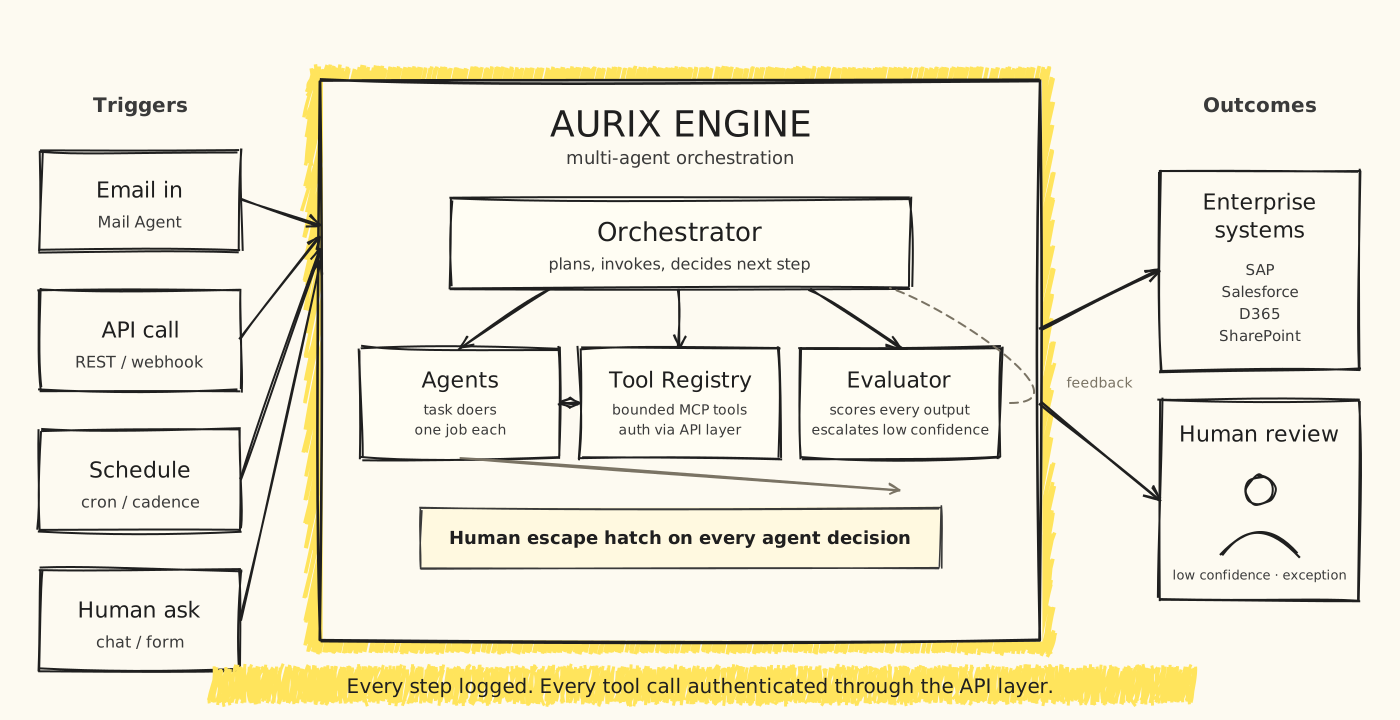
Orchestrator plans. Small agents do one job each. Tools are bounded and authenticated through the AI API layer. Evaluator scores every output before it acts. Human escape hatch on every decision.

Aurix multi-agent engine architecture: triggers on the left flow into the engine, which contains an Orchestrator directing Agents, a Tool Registry, and an Evaluator, then routes actions to enterprise systems or a human review queue on the right.
Enterprise-ready by design

AI Agents Built for Enterprise Security, Compliance and Control

Putting an AI agent into production is mostly about what surrounds the model: who can access what, where data lives, how quality is proven, and who answers for the result. This is how every AutoGo agent is set up.

Security and access

Role-based access control (RBAC)

Every agent runs under its own service identity in Microsoft Entra ID, never a shared or personal login. Who can configure an agent, approve its work, or view its logs is set by role, so a reviewer can approve results without being able to change how the agent works.

Row-level data access

Agents reach your data only through scoped tools in the AI API layer, not raw database access. Each tool can be limited to the records a process needs, such as one subsidiary, cost centre or vendor group, rather than whole tables.

Data residency

Models run on Azure OpenAI in a Malaysian or Singapore region, and documents, outputs and logs stay in the same region. On Enterprise, AutoGo can run inside your own Azure tenant or on-premise, so data never leaves your environment.

Compliance and privacy

Regulatory compliance

Agents are designed around the rules Malaysian enterprises answer to: BNM RMiT for financial institutions, LHDN e-Invoice, PDPA, and PETRONAS Technical Standards and DOSH-JKKP for oil and gas. Controls and evidence are mapped to the framework that applies to you.

PDPA and your Data Protection Officer

Under the PDPA amendments in force since 1 June 2025, organisations above the prescribed thresholds must appoint a Data Protection Officer and report qualifying data breaches to the Commissioner within 72 hours. AutoGo gives your DPO a record of what personal data each agent processes, where, why, and who accessed it.

Logs and audit trail

Every tool call, retrieval, output and approval is logged in Azure Log Analytics and Microsoft Purview inside your tenant. When an auditor asks how a result was produced, the answer is a query, not a spreadsheet exercise.

Reliability and quality

SLA, SLO and SLI

We agree service level objectives (SLOs) for each process, such as processing time and success rate, and track the service level indicators (SLIs) behind them. Enterprise clients can add a contractual service level agreement (SLA) on top.

Quality assurance

Before go-live, every agent is tested against your real documents and edge cases, not sample data. Changes to prompts, rules or connectors are re-tested against the same set before they reach production.

Evaluations (evals)

The Aurix Evaluator scores every output before the agent acts. Low-confidence results go to a person, and the share handled automatically only rises as evaluation scores prove stable on your data.

Commercial and control

Cost containment

Pricing is per business process with unlimited users, not per seat or per AI call. Monthly processing allowances keep spend predictable, and usage is visible so there are no surprise AI bills as volume grows.

Commercial and legal terms

Your data remains yours and is not used to train AI models. Data handling, confidentiality and responsibilities are set out in your agreement, with NDAs available from the first conversation.

Enterprise features

Single sign-on, multi-step approval routing, policy-based approval thresholds, a register of every agent with its owner and permissions, private tenant or on-premise deployment, and SLA-backed support.

Frequently Asked

Can you build an agent for our ERP?+
Yes. AutoGo runs on our own Aurix multi-agent engine, which talks to any ERP through the same authenticated API layer we build for enterprise clients on Microsoft Azure. If it has an API, a database, or a file export, we can wire an agent to it.
Do we buy these as products or as a service?+
Both models are available. Some clients license an agent as a managed service and we run it for them. Others deploy AutoGo on their own Azure tenant and we hand over the agent for their team to operate. The Aurix engine is the same either way.
How is this different from RPA?+
Traditional RPA scripts break the day a layout, screen position, or button changes. AutoGo agents read data with AI document intelligence, make bounded judgements through the Aurix Orchestrator, and score every output before it acts. Layouts change, agents adapt. We wrote about the difference in detail on the blog.
How long does it take to deploy an agent?+
A first agent typically ships in six to eight weeks, with reviewer-in-the-loop from day one and the auto-execution threshold raised gradually as evaluation scores stabilise. The methodology is on our Sept 9 blog post.
Where does the data go?+
Nowhere it should not. Every agent tool call goes through our AI API layer, authenticated via Azure AD, logged in Azure Log Analytics and Microsoft Purview, ready for BNM and PDPA audit. LLM traffic runs through Azure OpenAI in-region for regulated workloads.
How does AutoGo support PDPA compliance and our Data Protection Officer?+
Each agent can reach only the personal data its process needs, a person approves its results, and every run is logged inside your tenant. That gives your Data Protection Officer a clear record of what personal data was processed, where, for what purpose and by whom, which supports your obligations under the PDPA, including the breach notification rules in force since 1 June 2025.
Where is our data stored and processed?+
AutoGo uses Azure OpenAI in a Malaysian or Singapore region, and documents, outputs and logs stay in that region. On Enterprise, AutoGo can run in your own Azure tenant or on-premise.
What SLA, SLO and SLI commitments do you offer?+
For each process we agree service level objectives, such as processing time and success rate, and track the service level indicators that measure them. A contractual SLA is available on Enterprise.
How do you evaluate and quality-assure AI agent outputs?+
Every agent is tested against your real documents before go-live. In production, the Aurix Evaluator scores each output, low-confidence results go to a person, and automation only increases as evaluation scores stay stable.
How do you keep AI costs under control?+
AutoGo is priced per business process with unlimited users, and each plan includes a monthly processing allowance, so costs are predictable rather than tied to the number of AI calls or seats.
A workflow you want to see an agent for?

Tell us the process, the ERP, and the pain point. We will scope whether an agent earns its complexity and, if it does, what a six to eight week pilot looks like.